

Exploring the fascinating world of AI in predicting stock market trends for retail investors, this guide offers a deep dive into the innovative strategies and technologies shaping the future of investing.
From the fundamental concepts of AI in stock market prediction to the intricate details of data sources and ethical considerations, this guide covers it all in a manner that is both informative and engaging.
Overview of AI in Stock Market Prediction
Artificial Intelligence (AI) plays a significant role in predicting stock market trends by utilizing advanced algorithms to analyze vast amounts of data. This technology has revolutionized how retail investors make informed decisions in the stock market.How AI is Used to Analyze Stock Market Data
AI algorithms are designed to sift through massive datasets of stock market information, including historical price movements, trading volume, market news, and social media sentiment. By employing machine learning and deep learning techniques, AI can identify patterns, correlations, and anomalies that may not be apparent to human analysts. This analysis helps investors forecast future stock price movements with more accuracy and speed than traditional methods.- Machine Learning Models: AI systems can use historical data to train machine learning models that can predict stock price movements based on various factors.
- Natural Language Processing (NLP): AI-powered tools can process and analyze vast amounts of textual data from news articles, financial reports, and social media to gauge market sentiment and make predictions.
- Algorithmic Trading: AI algorithms can execute trades at high speeds based on predefined criteria, optimizing trading strategies and minimizing human error.
Benefits of Using AI for Predicting Stock Market Trends
Using AI for stock market prediction offers several advantages to retail investors:- Increased Efficiency: AI algorithms can process vast amounts of data quickly and accurately, providing investors with real-time insights and recommendations.
- Improved Accuracy: By analyzing data objectively and without emotional bias, AI can make more accurate predictions of stock market trends.
- Risk Mitigation: AI can help investors identify potential risks and opportunities in the market, allowing for better risk management strategies.
- Enhanced Decision-Making: AI-powered tools provide investors with data-driven insights that can support better decision-making in buying, selling, or holding stocks.
Types of AI Models for Stock Market Prediction
AI models play a crucial role in predicting stock market trends, offering retail investors valuable insights to make informed decisions. There are several types of AI models commonly used in this domain, with machine learning and deep learning algorithms standing out as the most popular approaches.Machine learning algorithms are designed to analyze historical data, identify patterns, and make predictions based on statistical analysis. These algorithms include linear regression, decision trees, random forests, and support vector machines. On the other hand, deep learning algorithms, a subset of machine learning, leverage neural networks to process vast amounts of data and extract intricate patterns for prediction.Comparison between Machine Learning and Deep Learning Algorithms
Machine learning algorithms are suitable for tasks with structured data, while deep learning algorithms excel in handling unstructured data such as text, images, and videos. Machine learning models require feature engineering, where relevant features are manually selected, while deep learning models automatically learn features from the data.- Machine Learning:
- Requires manual feature engineering
- Effective for structured data
- Includes algorithms like random forests and support vector machines
- Deep Learning:
- Automatic feature extraction
- Ideal for unstructured data
- Uses neural networks for complex pattern recognition
Examples of Successful AI Models in Stock Market Prediction
One prominent example of a successful AI model in predicting stock market trends is Long Short-Term Memory (LSTM) networks. LSTM networks, a type of recurrent neural network, can capture long-term dependencies in sequential data, making them well-suited for analyzing stock prices over time.Another successful AI model is the Random Forest algorithm, which is a machine learning technique capable of handling large datasets with high dimensionality. Random Forests are known for their accuracy in predicting stock prices based on historical market data and relevant indicators.Overall, the combination of machine learning and deep learning algorithms has revolutionized stock market prediction, providing retail investors with powerful tools to navigate the complex world of financial markets.Data Sources for AI in Stock Market Prediction
 AI algorithms rely on various data sources to predict stock market trends effectively. These sources play a crucial role in training AI models and ensuring accurate predictions.
Types of Data Sources
- Historical Stock Prices: AI models analyze historical stock prices to identify patterns and trends that can help predict future movements.
- Company Financial Reports: Data from financial reports, including revenue, earnings, and expenses, provide valuable insights into a company's performance.
- Market News and Sentiment Analysis: AI algorithms analyze news articles, social media trends, and other sources to gauge market sentiment and investor behavior.
- Macroeconomic Indicators: Data on factors like interest rates, GDP growth, inflation, and unemployment rates help AI models understand the broader economic landscape.
Importance of Data Quality and Quantity
High-quality and sufficient data are essential for training AI models in stock market prediction. Poor data quality or insufficient quantity can lead to inaccurate predictions and unreliable insights. AI algorithms require clean, accurate, and diverse data to make informed decisions.
Handling Real-Time Data
AI algorithms are designed to handle real-time data efficiently to predict stock market trends accurately. By continuously processing incoming data and updating their models in real-time, AI systems can adapt to changing market conditions and make timely predictions
Challenges and Limitations of AI in Stock Market Prediction
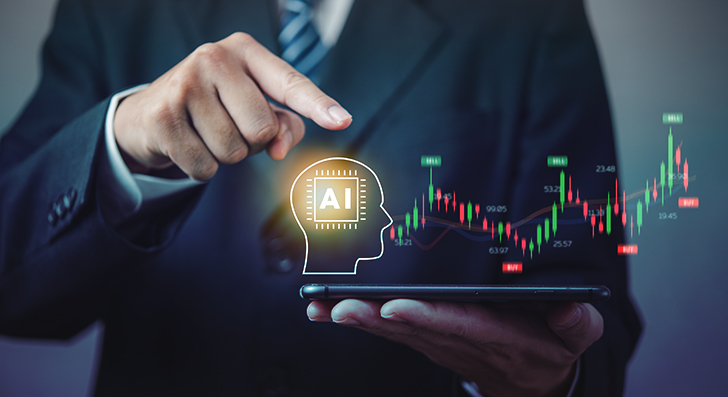 AI algorithms face several challenges when it comes to accurately predicting stock market trends. These challenges can hinder the effectiveness of AI models in providing reliable predictions for retail investors. Additionally, there are inherent limitations to the capabilities of AI when dealing with the unpredictable nature of the stock market.
Challenges Faced by AI Algorithms
- Complex Market Dynamics: Stock markets are influenced by a wide range of factors including economic indicators, geopolitical events, investor sentiment, and more. AI algorithms may struggle to analyze and interpret these complex dynamics accurately.
- Data Quality and Quantity: The success of AI models in predicting stock market trends heavily relies on the quality and quantity of data available. Inaccurate or insufficient data can lead to flawed predictions.
- Market Volatility: Stock markets are known for their volatility, with sudden fluctuations in prices that can be challenging for AI algorithms to predict accurately.
Limitations of AI in Predicting Unpredictable Market Behavior
- Black Swan Events: AI models may struggle to predict rare and unpredictable events, also known as black swan events, that can have a significant impact on stock market trends. These events are often outside the scope of historical data used by AI algorithms.
- Human Emotions and Behavior: Stock markets are influenced by human emotions and behaviors such as fear, greed, and irrational decision-making. AI may not always be able to account for these unpredictable factors in its predictions.
- Regulatory Changes: AI models may not adapt quickly to regulatory changes or policy decisions that can impact stock market trends, leading to inaccuracies in predictions.
Examples of Historical Instances where AI Failed to Predict Stock Market Trends
- In 2020, during the COVID-19 pandemic, many AI models failed to predict the sudden market crash and subsequent recovery, as the event was unprecedented and not captured in historical data.
- In 1987, the Black Monday stock market crash caught many AI algorithms off guard due to its rapid and unexpected nature, highlighting the limitations of AI in predicting such extreme events.
Ethical Considerations in AI-Based Stock Market Prediction
When it comes to utilizing AI in stock market prediction for retail investors, there are several ethical concerns that need to be addressed. The implications of relying solely on AI predictions for making investment decisions can have far-reaching consequences, impacting both individual investors and the market as a whole. It is essential to consider these ethical implications and take steps to mitigate any potential risks.
Ethical Concerns in AI-Based Stock Market Prediction
One of the main ethical concerns in using AI for stock market prediction is the issue of transparency. AI models can be complex and opaque, making it difficult to understand how they arrive at their predictions. This lack of transparency can lead to a lack of accountability and raise questions about the fairness of the predictions.
Another ethical consideration is the potential for bias in AI algorithms. If the data used to train these algorithms is biased or incomplete, it can result in discriminatory outcomes that disadvantage certain groups of investors. This raises concerns about fairness and equality in the investment process.
Furthermore, there is a risk of over-reliance on AI predictions, leading to a loss of human judgment and decision-making. Relying solely on AI models without considering other factors or conducting independent analysis can create a false sense of security and increase the likelihood of making poor investment choices.
Recommendations for Addressing Ethical Issues in AI-Based Stock Market Prediction
- Ensure transparency in AI models by providing explanations for how predictions are made and allowing for scrutiny of the underlying algorithms.
- Conduct regular audits of AI systems to detect and address any biases present in the data or algorithms used.
- Encourage diversification of investment strategies by combining AI predictions with other forms of analysis and expert advice.
- Educate retail investors about the limitations of AI in stock market prediction and promote a holistic approach to decision-making that considers a variety of factors.
Wrap-Up
In conclusion, the role of AI in predicting stock market trends for retail investors is rapidly evolving, offering new opportunities and challenges in the dynamic landscape of investment. As technology continues to advance, staying informed and adaptable is key for making informed decisions in the stock market.
Questions and Answers
How accurate are AI predictions in stock market trends?
AI predictions can be highly accurate, but they are not without limitations. Factors such as data quality, market volatility, and unforeseen events can impact the accuracy of AI models.
What are the ethical concerns surrounding AI-based stock market prediction?
Ethical concerns include potential bias in AI algorithms, overreliance on technology for investment decisions, and the need for human oversight to ensure responsible use of AI in finance.
Can AI predict stock market crashes?
While AI can analyze historical data and patterns to detect potential market downturns, predicting crashes with absolute certainty remains a challenge due to the complex and unpredictable nature of financial markets.


![[ChatGPT] openai.error.RateLimitError: You exceeded your current quota ...](https://consulting.semaraknews.co.id/wp-content/uploads/2026/04/image-1-120x86.png)

![[ChatGPT] openai.error.RateLimitError: You exceeded your current quota ...](https://consulting.semaraknews.co.id/wp-content/uploads/2026/04/image-120x86.png)

![[ChatGPT] openai.error.RateLimitError: You exceeded your current quota ...](https://consulting.semaraknews.co.id/wp-content/uploads/2026/04/image-2-120x86.png)



![[ChatGPT] openai.error.RateLimitError: You exceeded your current quota ...](https://consulting.semaraknews.co.id/wp-content/uploads/2026/04/image-2-350x250.png)
