

Embarking on the journey of Venture Capital Trends: What Investors Look for in SaaS Startups in 2026, readers are invited to delve into a narrative that promises to be stimulating and informative.
The subsequent paragraph will offer detailed insights into the topic at hand, setting the stage for a comprehensive discussion.
What Investors Look for in SaaS Startups in 2026
Investors evaluating SaaS startups in 2026 are looking for specific key metrics to determine the potential for success and profitability. These metrics play a crucial role in attracting venture capital and guiding investment decisions.Key Metrics Considered by Investors:
- Annual Recurring Revenue (ARR): Investors prioritize SaaS startups with a strong ARR as it indicates a predictable and stable revenue stream.
- Customer Acquisition Cost (CAC) Payback Period: A shorter CAC payback period is favorable as it shows efficient use of resources and a quicker path to profitability.
- Churn Rate: Low churn rates are essential for SaaS startups as they demonstrate customer satisfaction and long-term revenue potential.
- Growth Rate: Investors seek SaaS startups with consistent and scalable growth rates, indicating market demand and the ability to capture market share.
Importance of Recurring Revenue Models:
Recurring revenue models are highly valued by investors due to their predictability and sustainability. SaaS startups that generate revenue through subscriptions or licensing agreements offer a steady income stream, reducing dependency on one-time sales and increasing investor confidence in long-term profitability.Significance of Customer Retention Rates and Growth Projections:
High customer retention rates are a key factor for investors as they indicate customer loyalty and the potential for recurring revenue. SaaS startups with strong growth projections demonstrate market awareness, scalability, and the ability to capitalize on emerging trends, making them attractive investment opportunities.Examples of Successful SaaS Startups:
- Slack: Slack gained investor attention for its rapid user adoption, high customer retention, and innovative communication platform, leading to a successful IPO.
- Zapier: Zapier's focus on automation solutions, scalability, and strong growth projections attracted venture capital, enabling the company to expand its market presence and offerings.
Market Trends Shaping Venture Capital Investments
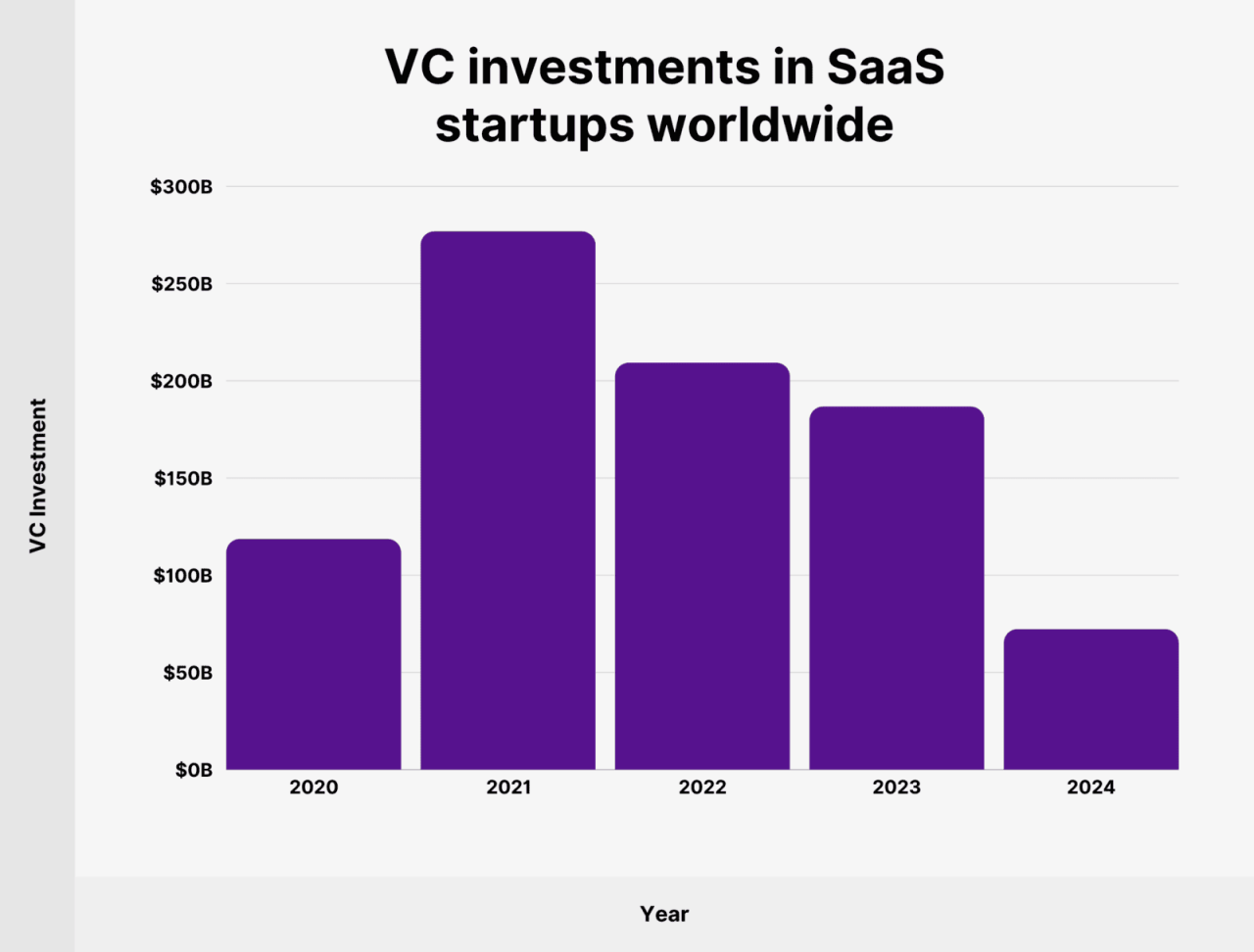
The landscape of venture capital investments in SaaS startups is constantly evolving, driven by various market trends that shape investor decisions and strategies. Let's delve into some key factors influencing these trends.Impact of Emerging Technologies
Emerging technologies like AI, blockchain, and IoT are playing a significant role in reshaping the SaaS industry and influencing investment decisions. These technologies have the potential to enhance the functionality and efficiency of SaaS solutions, making them more attractive to both businesses and consumers. Investors are closely monitoring the integration of these technologies into SaaS startups, as companies leveraging them are often seen as more innovative and competitive in the market.Changing Consumer Behavior
The evolution of consumer behavior and preferences is another crucial factor impacting investor strategies in the SaaS space. As consumers demand more personalized and user-friendly experiences, investors are looking for startups that can adapt to these changing needs. SaaS companies that prioritize customer-centric approaches and offer seamless, intuitive solutions are more likely to attract funding and succeed in the competitive market landscape.Geopolitical Factors and Regulatory Changes
Geopolitical factors and regulatory changes also play a significant role in shaping venture capital trends in the SaaS industry. Political instability, trade disputes, and shifts in regulatory frameworks can create uncertainty for investors, influencing their risk appetite and investment decisions. Startups that demonstrate resilience to geopolitical challenges and compliance with evolving regulations are perceived as more attractive investment opportunities.Strategies for SaaS Startups to Attract Venture Capital
Designing a Roadmap for Positioning
- Clearly define your target market and how your SaaS product addresses a pressing need or pain point in that market.
- Showcase a scalable business model that can adapt to changing market conditions and demonstrate potential for rapid growth.
- Highlight your unique selling proposition (USP) that sets your SaaS startup apart from competitors and emphasizes your competitive advantage.
- Develop a comprehensive go-to-market strategy that Artikels how you plan to acquire customers and drive revenue growth.
Essential Elements in a Pitch Deck
- A compelling story that clearly articulates your startup's mission, vision, and value proposition.
- Data-driven insights that support your market opportunity, showcasing the demand for your SaaS solution.
- A solid financial plan with realistic projections and a clear path to profitability to instill confidence in investors.
- A focus on key metrics and milestones that demonstrate progress and potential for future success.
Showcasing Scalability and Growth Potential
- Emphasize your ability to scale operations efficiently as your customer base grows, showcasing a clear path to expansion.
- Demonstrate a strong product-market fit by highlighting customer feedback, testimonials, and case studies that validate the demand for your SaaS solution.
- Showcase your technology roadmap and innovation pipeline to illustrate how you plan to stay ahead of the competition and capture market share.
Importance of Team, Product-Market Fit, and Competitive Advantage
- Investors look for a strong founding team with complementary skills, industry experience, and a track record of success to lead the startup to profitability.
- Prove that your SaaS product resonates with the target market by showcasing positive customer feedback, retention rates, and growth metrics.
- Highlight your competitive advantage, whether it's through proprietary technology, unique features, or strategic partnerships that create barriers to entry for competitors.
Wrap-Up
Wrapping up the discussion, the concluding paragraph will encapsulate key points and leave readers with a lasting impression of the trends in the SaaS startup landscape for 2026.
FAQ Corner
What are the key metrics investors consider when evaluating SaaS startups?
Investors often look at metrics like ARR (Annual Recurring Revenue), CAC (Customer Acquisition Cost), and Churn Rate to assess the financial health and growth potential of SaaS startups.
How do changing consumer behaviors impact investor strategies in the SaaS industry?
Changing consumer behaviors can influence product demand, user acquisition costs, and market positioning, prompting investors to adjust their strategies accordingly to align with evolving trends.
What elements should be included in a pitch deck to attract venture capital investors?
A compelling pitch deck should highlight market opportunity, competitive landscape, revenue projections, team expertise, and a clear go-to-market strategy to capture the interest of venture capital investors.


![[ChatGPT] openai.error.RateLimitError: You exceeded your current quota ...](https://consulting.semaraknews.co.id/wp-content/uploads/2026/04/image-1-120x86.png)

![[ChatGPT] openai.error.RateLimitError: You exceeded your current quota ...](https://consulting.semaraknews.co.id/wp-content/uploads/2026/04/image-120x86.png)

![[ChatGPT] openai.error.RateLimitError: You exceeded your current quota ...](https://consulting.semaraknews.co.id/wp-content/uploads/2026/04/image-2-120x86.png)



![[ChatGPT] openai.error.RateLimitError: You exceeded your current quota ...](https://consulting.semaraknews.co.id/wp-content/uploads/2026/04/image-2-350x250.png)
